





















When installing a hydraulic breaker on a mini excavator, a common situation is that the breaker has already been selected, and only after installation is it found that the impact rate is unstable, the oil temperature is high, or the connection pins do not line up. The problem is often not the breaker itself, but that the carrier-side and site-side information was not fully prepared before purchase. Using the public data of the ME530 hydraulic breaker on this site as a guide, this article explains, in preparation order, what information needs to be verified before matching a breaker to a mini excavator, what data can be requested from the manufacturer, and what must be confirmed on site.
First Clarify What Work the Mini Excavator with Breaker Must Complete
The work target for a mini excavator with a breaker is usually not large-scale mine crushing, but rather concrete structure demolition, sidewalk and driveway breaking, basement renovation, utility trenching in frozen or hard soil, and landscaping rock feature work—jobs with limited space and scattered work points. Such work places demands on the breaker for portability and flexible starting, while also requiring carrier protection, because the boom and hydraulic system margins of a mini excavator are relatively limited.
Different work targets mean different priorities in preparing information. If the main work is breaking concrete and asphalt, attention should be paid to whether the chisel diameter and impact frequency match; if medium-hard rock is involved, attention should be paid to whether the impact energy is sufficient and whether the hydraulic oil temperature can be controlled during continuous operation. These judgments are all based on the actual data of the carrier and attachment, and cannot be decided solely by the breaker's appearance or tonnage label.
Carrier Side: Operating Weight and Hydraulic Parameters Are Two Basic Thresholds
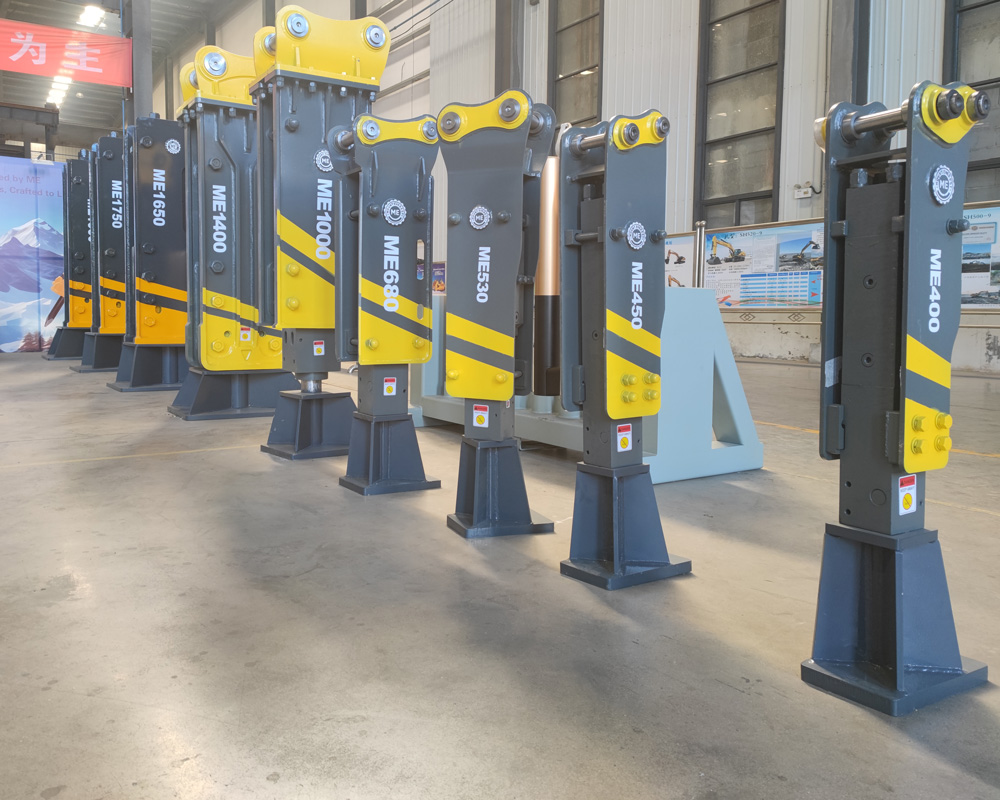
The ME530 data specifies compatibility with 4–6 t excavators, a breaker body weight of 161 kg, an operating flow of 20–50 L/min, and an operating pressure of 90–120 kgf/cm². These three sets of figures are the carrier information that must first be compared before matching a mini excavator.

Operating weight determines the load-bearing relationship. 4–6 t is the compatibility range given for the ME530, but different models within the same tonnage range have different boom structures, counterweights, and hydraulic system margins. Before purchase, the machine's operating weight, boom type, and counterweight condition must be obtained; judgment cannot be made solely on the tonnage label.
Hydraulic flow and pressure determine the power supply. Whether the actual flow of the carrier's hydraulic pump in the breaker working circuit falls within the 20–50 L/min range, and whether the operating pressure is within 90–120 kgf/cm², must be checked against the carrier's hydraulic parameters or confirmed in writing by the manufacturer. Low flow will result in an insufficient impact rate, while high pressure may accelerate seal wear. These two items are related to the breaker's valve body settings and cannot be changed arbitrarily by on-site pressure adjustment.
Attachment Side: Weight, Chisel, and Interface Dimensions
The ME530 has a breaker body weight of 161 kg, a chisel diameter of 53 mm, heavy-duty through-bolt fastening, and an internal accumulator cushioning structure. For a mini excavator, attachment weight directly affects the boom-end load and machine stability. Before purchase, the carrier's rated load at the maximum working radius should be checked to confirm that the 161 kg attachment plus connecting parts remains within the allowable range.
Interface dimensions are easily overlooked. The connection pin diameter, pin spacing, and quick-coupler model between the breaker and the carrier are not interchangeable among different carrier manufacturers and attachment manufacturers. This item is not confirmed for the user in the data; the carrier connection dimensions and the breaker connection dimensions must be checked side by side, and an interface drawing should be provided by the manufacturer if necessary.

Hydraulic Piping and Return Conditions
Whether the mini excavator has a reserved breaker circuit, and whether the return oil goes directly to the tank or passes through a return filter, will affect the breaker's operating stability. The ME530 data mentions that the internal accumulator is used to absorb pressure pulsation, but this does not replace verification of the carrier-side return capacity. Before purchase, confirm the working flow, return backpressure, and filter specifications of the carrier's breaker circuit to avoid oil temperature rise caused by poor return flow.
Site Conditions: Working Space and Continuous Operation Duration
The work scenarios targeted by the ME530 include concrete breaking, rock demolition, sidewalk demolition, basement renovation, utility trenching, and narrow-space construction. The common feature of these scenarios is limited working area and frequent relocation, which place demands on the carrier's maneuverability and the breaker's starting response.
When preparing information, at least three items on the site side must be clarified: whether the clear width and clear height of the working space allow the mini excavator with breaker to enter and complete slewing; whether the material type is concrete, asphalt, or medium-hard rock, which relates to the choice of chisel type and impact rate; and the approximate duration of a single continuous breaking session. When continuous operation time is long, the carrier's hydraulic oil cooling capacity needs to be evaluated separately.
Checklist to Verify Item by Item Before Purchase
- Carrier model, operating weight, boom type, and counterweight condition
- Actual flow and operating pressure of the carrier's breaker circuit, and whether written manufacturer parameters are available
- Return method, return backpressure, and filter specifications
- Carrier connection pin diameter, pin spacing, and quick-coupler model
- Whether the boom-end load with the 161 kg attachment plus connecting parts is within the allowable range
- Whether the 53 mm chisel diameter corresponds to the material to be broken
- Clear width and clear height of the working space, and duration of a single continuous breaking session
- Material type and whether rebar or hard aggregate is involved
When the Matching Plan Needs to Be Re-evaluated
If the carrier's actual operating flow is significantly lower than 20 L/min, the ME530's impact rate may not meet expectations; if the carrier's operating pressure is consistently higher than 120 kgf/cm², the manufacturer must be consulted to confirm whether the valve body setting permits it. When the carrier tonnage is below 4 t or above 6 t, the ME530 is outside the compatibility range specified in the data, and the attachment specification should be reselected rather than forced to match by adjusting pressure.
When the work is mainly large-scale continuous hard rock breaking, the solution of a mini excavator with a 53 mm chisel breaker has boundaries in both efficiency and carrier load; such working conditions should be re-evaluated for the equipment combination, and the applicable scenarios of the ME530 must not be expanded beyond what the data supports.
Site Information to Provide When Requesting a Quotation
When requesting a quotation from the manufacturer or dealer, it is recommended to provide: carrier model and operating weight; measured or written parameters for the flow and pressure of the breaker circuit; connection dimensions; type and estimated volume of material to be broken; working space dimensions; single-shift operating duration and continuous breaking rhythm; and whether a quick-coupler is required. Only with complete information can the manufacturer determine whether the ME530 is within the compatible range and what connecting parts and piping components are needed.
Whether the carrier and attachment are directly compatible should ultimately be based on the item-by-item verification results of operating weight, hydraulic flow and pressure, attachment weight, connection dimensions, and piping data. For carrier parameters not covered by the product data on this site, selection judgment should be made only after confirmation with the carrier manufacturer or equipment owner.