

















Bulldozers at mine stripping sites are usually not evaluated in isolation: they push blasted overburden or loose material to the loading point while transport trucks wait nearby, and the bench height and push distance fix the workload of each cycle. If the bulldozer cannot coordinate with the trucks and bench layout, even high horsepower can lead to situations where it can push but waits for trucks, or trucks arrive before enough material is gathered. This article focuses on this coordination issue and, based on public information about the SD46-6 crawler bulldozer from this site, explains which conditions should be considered together with high-horsepower bulldozers in mine stripping.
First, clarify what work the bulldozer performs in mine stripping
In mine stripping, bulldozers commonly perform tasks such as pushing blasted loose overburden to the loading point, cleaning the working face along bench edges, short-distance hauling of materials between the pit and the dump, and working with rippers to handle hard ground. These tasks have both common and differing requirements for equipment: pushing capability depends on traction and blade, bench operation depends on undercarriage stability and slope adaptability, and loading coordination depends on whether the push-gathering rhythm can keep up with truck turnaround.
Therefore, the question of how high-horsepower bulldozers match transport and benches in mine stripping can be broken down into three aspects that need separate verification: the single-push volume determined by push distance and blade capacity, the operational safety boundary determined by bench height and slope, and the rhythm coordination determined by truck bed capacity and turnaround.
Push distance and blade capacity: can the single-push volume cover the truck?
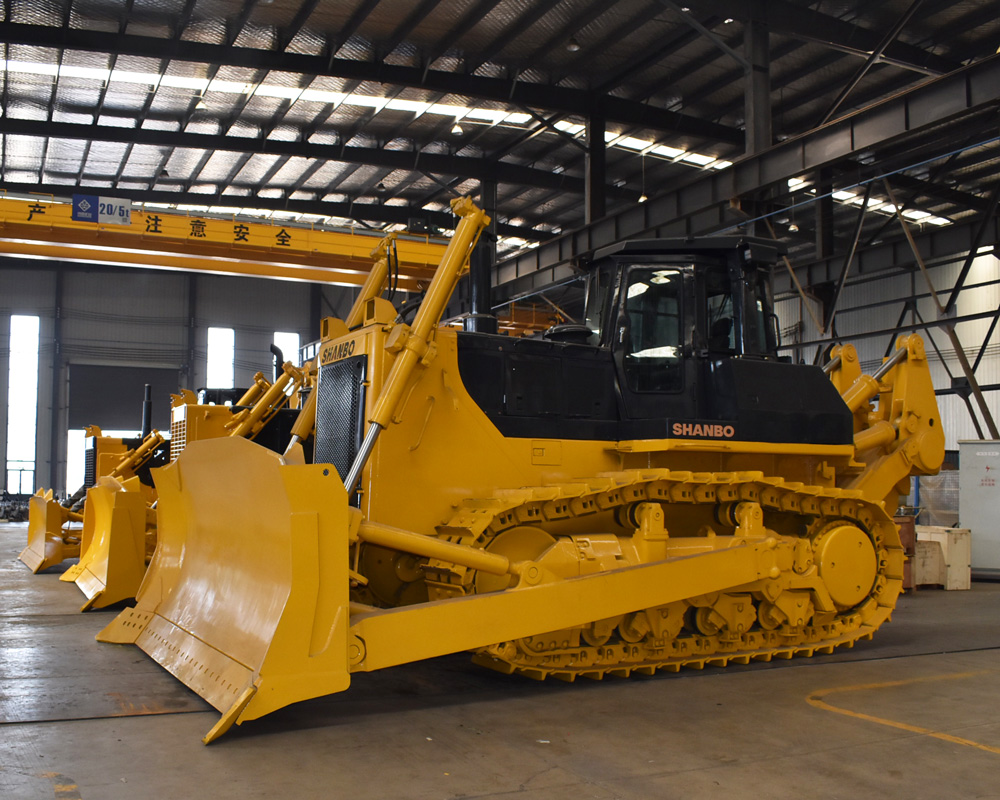
The main efficiency indicator of a bulldozer in stripping often points to how much material it can push per pass and how far. Public information about the SD46-6 from this site gives a blade capacity of 16 m³, blade width of 4314 mm, and blade height of 1841 mm, and describes its standard front configuration as a large-capacity semi-U bulldozer blade, using a high-strength box frame and high-toughness wear-resistant materials, for large-area earth-rock accumulation and bulk material handling. The maximum cutting depth of the blade is 700 mm, which is directly related to cutting into and pushing loose overburden.
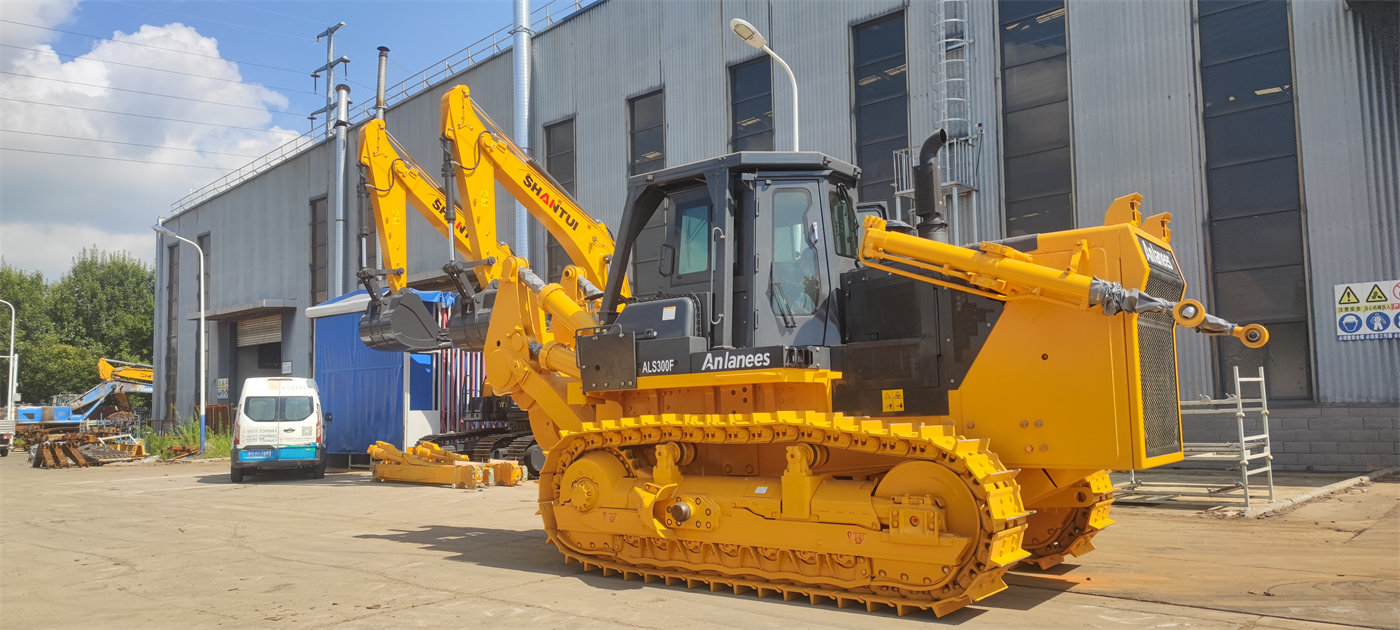
When matching with transport trucks, what matters is the distance from the push-gathering point to the loading position, the material volume pushed per pass, and the time required to form a pile sufficient for the truck bed capacity. The longer the push distance, the longer the single-cycle time, and the harder it is to compress the waiting time of a truck with the same bed capacity; in this case, the coordination of blade capacity and push speed deserves more attention than horsepower alone. The 16 m³ blade capacity in the information can serve as one of the basic data for comparison with truck bed capacity and loading point layout, but it cannot directly derive the number of cycles under a specific truck configuration; this needs to be calculated based on site distance and work organization.
Traction and undercarriage: additional constraints on the whole machine from bench slopes and ground conditions
Mine bench operations are not flat pushing. The bulldozer must climb slopes, turn around at bench edges, and withstand impacts from rock on the blade and running gear. SD46-6 information shows an operating weight of 54000 kg, ground pressure of 0.123 MPa, gradeability of 30°, and a K-type floating undercarriage and integral articulated undercarriage design. The information also mentions that the undercarriage is used to buffer impact loads during travel and operation, and is equipped with a multi-stage shock absorption assembly to cope with travel stability in mountainous, rocky, and mining area conditions.
The correspondence between these conditions and bench operations lies in: ground pressure relates to the degree of sinking on loose piles and soft foundations; gradeability relates to whether continuous up-and-down operation is possible at the current bench slope; undercarriage structure relates to the durability of the running gear under long-term impact operation. It should be noted that the 30° gradeability is a whole-machine capability parameter given in the product information; whether the actual bench slope allows the bulldozer to push stably at that slope still needs on-site judgment considering factors such as whether the pile is loose, whether the ground is wet and slippery, and whether the blade is fully loaded.
Bench height and truck turnaround: two variables in rhythm coordination
Bench height affects the bulldozer's push path: the higher the bench, the different the organization of pushing material down from above or pushing in layers, and the different the safety margin for the bulldozer at the bench edge. Truck turnaround depends on the loading point layout and road conditions. The SD46-6 information does not provide a correspondence table with specific bench heights or truck tonnages, so it cannot be claimed that this model is suitable for a particular bench height or a particular truck bed capacity. Before purchase, bench height, slope length, push distance, and truck turnaround time should be taken as site inputs, explained to the supplier, and then judged for matching.
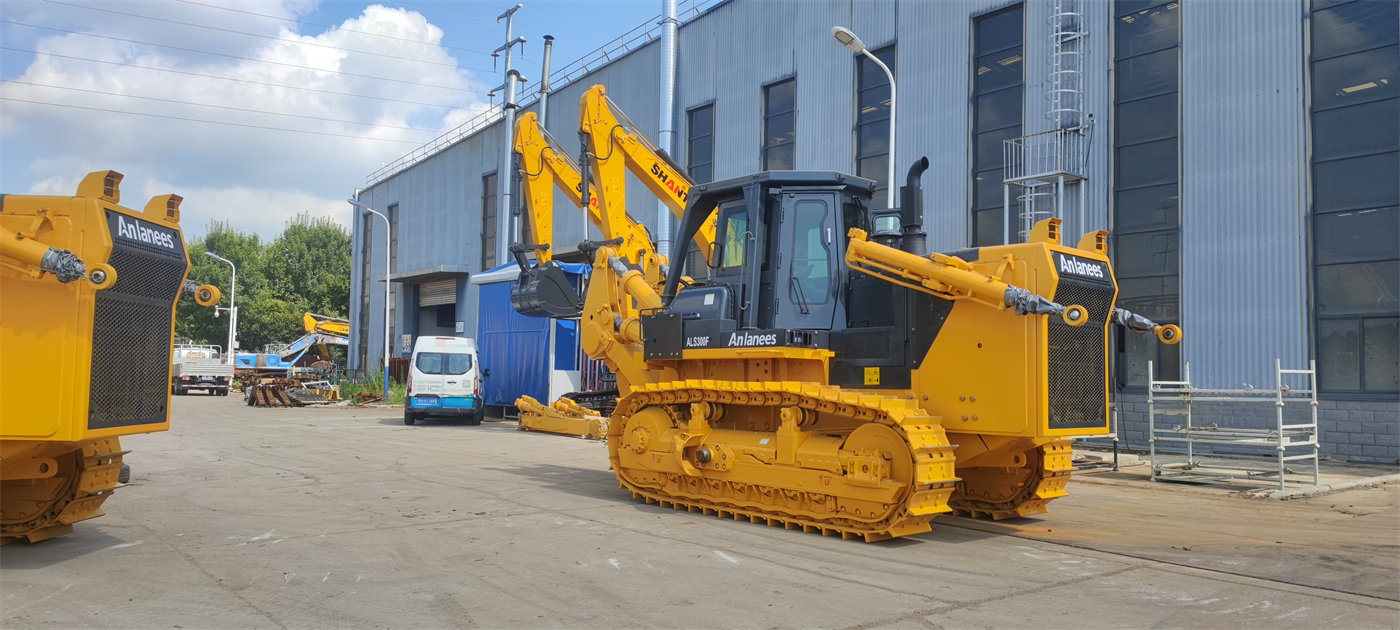
An operational verification method is: draw the bulldozer's push path length according to the current bench layout, estimate the material volume pushed per pass, and then compare the time required per truck with the bulldozer's cycle time per pass to see whether the two are of the same order of magnitude. If the bulldozer cycle time is significantly longer than the truck loading interval, it indicates that the coordination between the equipment and transport organization needs adjustment, and does not necessarily mean insufficient horsepower.
Hard ground and ripper: pre-treatment configuration before stripping
When hard strata are encountered in mine stripping or loosening is required, the ripper at the rear of the bulldozer becomes a configuration condition. SD46-6 information shows that its rear support device is an adjustable-angle single-shank heavy-duty ripper, used for deep ripping, rock breaking, and hard ground loosening. This means that in cases where pre-loosening is required before stripping, the machine can undertake part of the ripping work; however, whether the ripper can replace blasting or whether other equipment is needed depends on rock-soil hardness and site processes. The information does not give ripping efficiency or applicable hardness range, which need to be confirmed on site.
Power and transmission: another dimension of continuous heavy-load operation
SD46-6 information shows that it is equipped with a Cummins KTA19-C525 turbocharged and intercooled diesel engine, rated power 340 kW/600 hp, rated speed 2000 rpm, displacement 18.9 L; the transmission adopts a hydraulic power shift gearbox with planetary final drive and a built-in hydraulic buffer structure. The information also mentions that core seals and high-pressure hoses of the hydraulic system use imported high-standard parts, the externally mounted distribution valve group facilitates inspection and maintenance, and the intelligent monitoring system monitors hydraulic oil temperature, oil level, and cooling water temperature and provides over-limit alarms.
The significance of this information for mine stripping lies in the stability of continuous operation: stripping sites usually have long shifts and heavy loads, and power output and transmission durability affect whether the equipment can maintain the push rhythm within the shift, rather than the size of the single-push volume. The information does not give specific fuel consumption values or maintenance intervals, which should be requested separately during procurement.
Applicable boundaries and matters to confirm before purchase
High-horsepower bulldozers are not needed in all mine stripping situations. In scenarios with very short push distances, fast truck turnaround, and materials that do not require pre-loosening, equipment that is too large may lead to issues with shift utilization; when bench slope, ground bearing capacity, or spatial layout exceed equipment conditions, choosing high horsepower will not solve organization and safety problems. The following conditions are recommended to be confirmed item by item before purchase:
- Bench height, slope length, and push distance, used to judge whether the single cycle matches truck turnaround;
- Truck bed capacity and loading point layout, used to compare with blade capacity and push-gathering rhythm;
- Ground bearing capacity and looseness, used to judge ground pressure and undercarriage passability;
- Material hardness and whether pre-loosening is required, used to judge whether the ripper enters the plan;
- Shift arrangement and continuous operation duration, used to verify the continuous output conditions of power and transmission;
- Local service and spare parts supply conditions; the global after-sales service network mentioned in the information needs to be verified against actual regional coverage.
It should be clarified that the above correspondences are selection analysis based on public information about the SD46-6 from this site, not actual usage conclusions from a specific mining customer, and cannot be used to infer the actual efficiency of this model under specific bench or truck configurations. Specific matching still needs to be calculated based on site data.
Site information to provide when requesting a quotation
If requesting a quotation from a supplier for a mine stripping push plan, it is recommended to provide: type and hardness of stripped material, bench height and slope length, push distance, truck bed capacity and turnaround organization, shift duration, whether ripping work is required, and on-site power supply and maintenance conditions. This information determines whether the bulldozer can coordinate with transport and benches, rather than merely selecting a horsepower class.